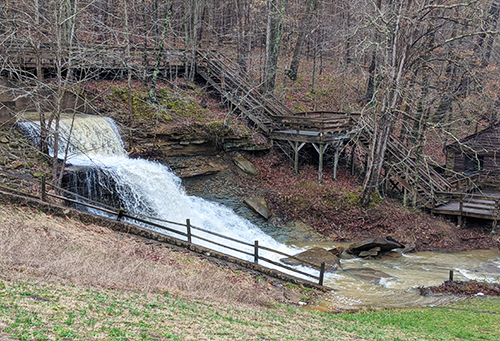
May 20 | 7 p.m. | BSU Nature Lab & Zoom Liz Marthaler, Assistant Property Manager at Mounds State Park, will discuss the Civilian Conservation Corps (CCC) and the impact this program had on national, state, and local park systems within the United States, including their impact on the Indiana State Park system. Liz will alsoContinue reading “A link to the past: the Civilian Conservation Corps”
Category Archives: Programs
Good genes or good parenting: What’s preferred in a bird’s mate?
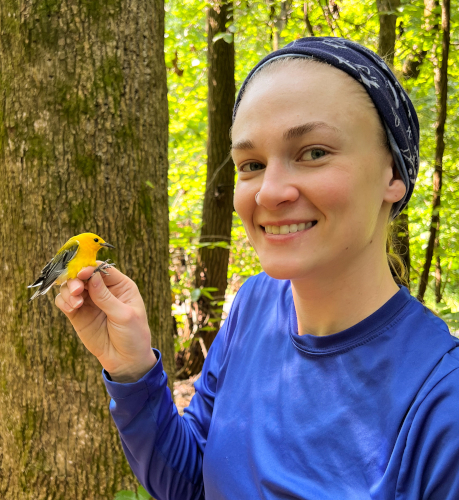
Apr. 15 | 7 p.m. | BSU Nature Lab & Zoom For birds, choosing a mate can be a high-stakes decision, with impacts on both current reproductive success and lifetime fitness. Is it better to choose a mate that will pass good genes on to offspring or one that will be a good parent andContinue reading “Good genes or good parenting: What’s preferred in a bird’s mate?”
2025-2026 season
Oct. Cammy Sutter, executive director of the Little River Wetlands Project, told the story of Eagle Marsh, one of Indiana’s largest wetland restoration projects, and the remarkable journey that transformed flooded cornfields into a thriving 800‑acre wildlife preserve that is now home to more than 250 species of birds. She also explained the challenges ofContinue reading “2025-2026 season”
2024-2025 season
Oct. Several RCAS members shared photos and information about a birding trip they took to the Eastern Shore of the United States, where they witnessed the May spawning of horseshoe crabs (and the birds that depend on their eggs), the migration of Red Knots (a federally threatened species) and other shorebirds, a sprawling rookery ofContinue reading “2024-2025 season”
2023-2024 season
Oct. Reed Crawford, a Ph.D. candidate at the University of Illinois at Urbana-Champaign, gave a presentation about the bats of Indiana, including topics of interest like species diversity, roost selection, foraging ecology, and strategies for conservation in urban and rural environments. Nov. With Kamal Islam, Ball State University Professor of Ornithology, we explored some of Colombia’sContinue reading “2023-2024 season”
2022-2023 season
Oct. Introduction to the world of orchid pollination: Following a tour of Ball State’s new Nature Lab, Carol Day, Orchid Curator of the Rinard Orchid Greenhouse, introduced us to the strategies that orchids use to entice hummingbirds, butterflies, and other insects to transfer pollen from one plant to another. Nov. Julian Grudens, a graduate studentContinue reading “2022-2023 season”
2021-22 Season
Sept. Monitoring Overwinter Survival Program: Steven Albert and Lauren Helton, of the Institute for Bird Populations, will tell us about the institute’s Monitoring Overwinter Survival (MoSI) program, an international network that helps scientists better understand the factors that affect avian population declines. Oct. Treasuries & discoveries: Chapter members shared images and stories of their 2021 birding joysContinue reading “2021-22 Season”
2020-21 Season
Oct. Stockbridge Audubon Society: Terri Gorney shared her research about the Stockbridge Audubon Society, the first Audubon chapter in Indiana and one of the oldest in the country. The chapter’s namesake, Charles Stockbridge, was a taxidermist whose collection of 200+ birds now resides at Earlham College. Nov. Voices & Vision for RCAS: In a veryContinue reading “2020-21 Season”
2019-20 Season
Oct. From cloud forests to deserts: Kamal Islam, Ball State professor of biology and RCAS board member, introduced us to the birds of Ecuador, one of the megadiverse countries of the world, with more than 1,600 species of birds. Nov. Bird of Prey film: In partnership with Ball State’s student chapter of The Wildlife Society, weContinue reading “2019-20 Season”
2018-19 Season
Oct. Undergraduate wildlife biology adventures: Kaitlin Gavenda presented her research on Northern Saw-whet Owls, and Kalee Snorden shared her experiences as an intern with Aves Argentinas. Both are in Ball State’s wildlife biology and conservation program. Nov. Bird of Prey: We co-sponsored showing of Bird of Prey, a documentary produced by the Cornell Lab of Ornithology that tells theContinue reading “2018-19 Season”
2017-18 Season
Oct. Welcome back the bluebirds: Christy Frampton, president of Boone County Bluebird Society and district coordinator for the Indiana Bluebird Society, offered insights about Eastern Bluebirds’ nesting habits, why they need our help, and how to attract them. Nov. Conservation awards program Dec. Birding close to home: Rose Jeffery, RCAS Field Trip Chair, showcased the best birdingContinue reading “2017-18 Season”
2016-17 Season
Oct. Cerulean Warbler research: Ball State graduate student Clayton Delancey presented his current research, using radio transmitters, on Cerulean Warblers, a neotropical migrant species whose status is considered threatened. Nov. Conservation awards program Dec. Sierra Club’s Beyond Coal Campaign: Jodi Perras discussed the Indiana Michigan Power/AEP Rockport power plant—the nation’s sixth-largest carbon polluter and secondContinue reading “2016-17 Season”
 Robert Cooper Audubon Society