Our chapter’s rich history of conservation activities have ranged from hands-on habitat restoration to conservation education to community activism.
To become involved in any of the chapter’s conservation activities, contact Jeff Ray or Jim Schowe, Conservation Co-chairs, at jaray56@gmail.com. or jim.schowe@gmail.com.
American Kestrel nest box monitors needed
Feb. 12 | 6 p.m. | BSU Nature Lab
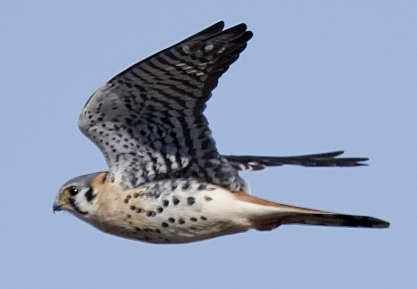
We at the Robert Cooper Audubon Society are opening an American Kestrel nest box this March at a Red‐tail Land Conservancy property. Volunteers will then start monitoring the box to prevent European Starlings from using the box.
If you missed our information session on February 12 but are interested in becoming a nest box monitor, email us at admin@cooperaudubon.org.
Advocating for Indiana wetlands
By Annette Rose and Audubon Great Lakes
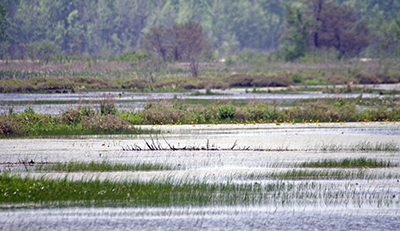
Each fall and spring thousands of birds, such as soras, snipes, and herons, migrate to and through Indiana, many in search of wetlands. These bodies of water, which come in all sizes and shapes, provide Indiana’s birds with places to rest, eat, and take shelter to sustain their long journeys. Protecting these places will protect vulnerable wildlife.
The National Audubon Society reports that 40 percent of all plant and animal species live or breed in wetlands. But they’re not just important for wildlife. They provide clean water, flood and drought protection, and opportunities for recreation. Nationally, 148 million residents watch wildlife recreationally – and here in Indiana, recreationists who use wetlands help support the state’s outdoor recreation economy, which generates more than $15 billion in consumer spending a year.
The Clean Water Act prohibits discharging pollutants into “the waters of the United States.” On May 25, 2023, the U.S. Supreme Court issued a long-debated ruling that limited the jurisdiction of the Clean Water Act to wetlands that have a “continuous surface connection” with a navigable water body. Now, the states will determine the fate of non-connected wetlands. In 2021, Indiana legislators significantly reduced state wetland protections. The Hoosier Environmental Council estimates that over 300,000 more acres of Indiana wetlands are in jeopardy during the coming legislative session.
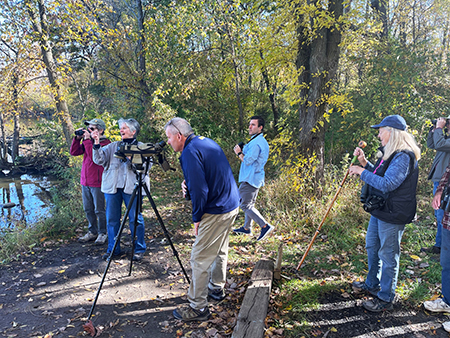
Robert Cooper Audubon Society is working to prevent further wetland loss in Indiana. On October 23, 2024, we led a bird walk with Senator Scott Alexander (R-Muncie) and representatives of Audubon Great Lakes, to emphasize the importance of protecting wetlands, prairies, and forests in East Central Indiana. We experienced the wonder of fall migration at Red-tail Nature Preserve, a vital stopping place for vulnerable marsh birds like the Swamp Sparrow, and got to see up close how birds depend on our natural resources.
Thank you, Senator Alexander, for joining us to discuss the importance of Indiana’s natural spaces for protecting and conserving wildlife. Protecting natural spaces will help ensure a healthy and resilient future for Indiana.
What you can do: Be a voice for birds and healthy people!
- Contact your state representative and state senator and convey your concerns about preserving and restoring Indiana’s wetlands. (Find your legislator at iga.in.gov/information/find-legislators.)
- Join the leadership of Robert Cooper Audubon Society! We are seeking volunteers to help with advocacy, email communication, education, and publicity. Contact Rose Jeffery, chapter president, at admin@cooperaudubon.org.
- Keep informed about conservation issues by joining Audubon Great Lakes’ Action Alert at gl.audubon.org/take-action.
- Send the Hoosier Environmental Council photos, short videos, descriptions, and stories about your local wetland so that they can use this information in policy discussions. Email them at comments@hecweb.org.
Indiana’s wetlands:
- Enable rainwater to infiltrate soils and replenish groundwater for our wells
- Slow stormwaters and reduce flooding of homes, roadways, and infrastructure
- Provide a cost-effective pollutant filter, reducing runoff of nutrients, pesticides, oil, and other pollutants into our streams and surface waters
- Store floodwaters and maintain surface water flow during dry periods
- Provide recreation and tourism opportunities
Results of the White River Report Card
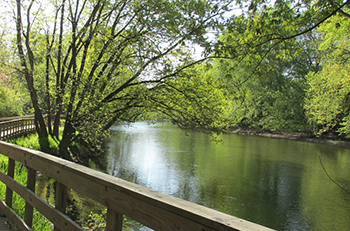
A group of diverse stakeholders solicited the public’s help in building the White River Report Card, as a tool to assess how the White River, and the communities that it runs through, are doing. The resulting information, now available at whiteriverreportcard.org, will help improve this invaluable natural resource and our ability to use and enjoy it.
For a brief history of the White River Watershed and information about the Ball Brothers Foundation’s role in the report card, read a guest editorial written by Jud Fisher, CEO of the Foundation.
Mounds Greenway
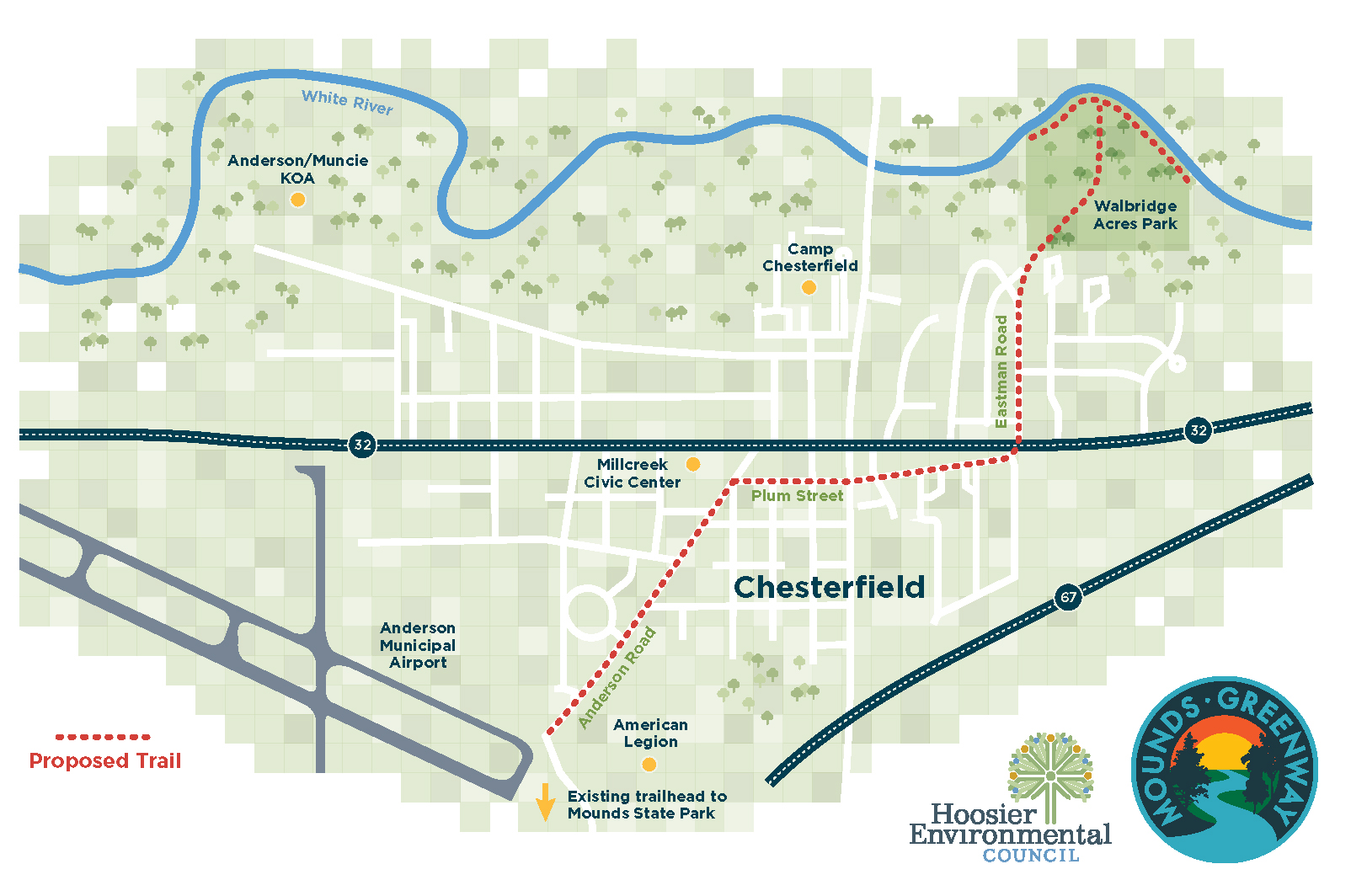
Our Audubon chapter continues to support the proposed creation of the Mounds Greenway, which would be not only a recreational trail but also a White River corridor conservation project.
The extensive riverside trail would take visitors through riverside forests and wildlife habitats, connecting Anderson, Chesterfield, Daleville, Yorktown, and Muncie, using existing trails where possible and creating new trails where needed.
When completed, the Mounds Greenway would:
- Conserve the free-flowing White River and its floodplain forests, wetlands and other natural communities by creating a high-quality linear park following the river.
- Conserve and enhance the historic and cultural resources in the river valley.
- Connect trails in Muncie and Anderson and build a regional recreational network that eventually will stretch throughout East Central Indiana, and to central Indiana via a greenway extension along the White River to Indianapolis.
- Create economic opportunity by enhancing the region’s quality of place and stimulating entrepreneurial investment.
The Hoosier Environmental Council (HEC) is leading efforts to promote the proposed Mounds Greenway. Stay up-to-date on the latest developments in the proposed project at www.moundsgreenway.org.
 Robert Cooper Audubon Society